Poodle Guide: Temperament, Exercise, Grooming, Training & What to Buy
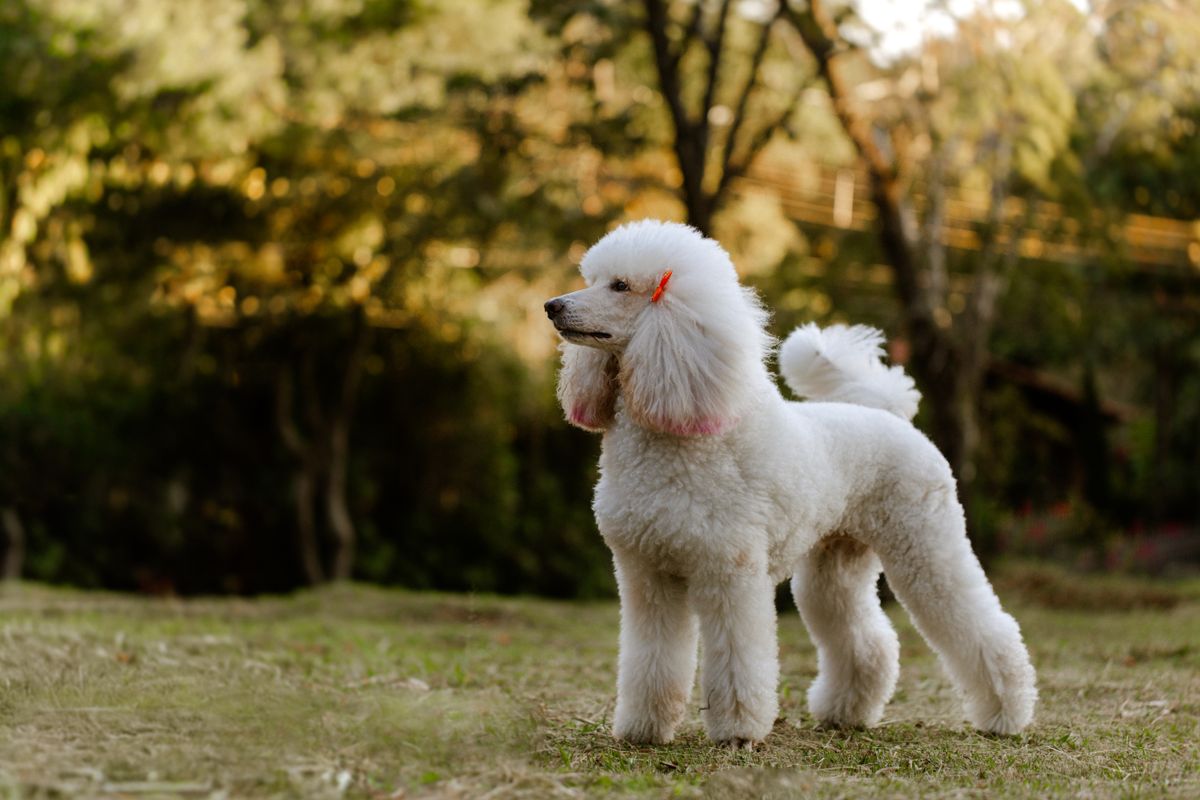
A Poodle is one of the cleverest dogs you can own, wrapped in a curly coat that sheds very little but needs real grooming. It comes in three sizes, Toy, Miniature and Standard, and all three need daily exercise, training and something to think about. It is a brilliant family dog, and a bored one.
| Height | Toy up to 10 in; Miniature 10 to 15 in; Standard over 15 in |
|---|---|
| Weight | Toy 4 to 6 lb; Miniature 10 to 15 lb; Standard 40 to 70 lb |
| Lifespan | 10 to 18 years |
| Coat | Curly, dense, low shedding |
| Shedding | Very little, but needs regular grooming |
| Energy | High. Needs daily exercise and mental work |
Breed-standard figures: AKC Poodle breed page.
Poodles started life as water retrievers in Germany, and the American Kennel Club recognized the breed in 1887. The fancy haircut is not just for show: it was a working clip that kept the joints warm and the coat out of the way in water. Today the Poodle is mostly a companion and a sport dog, and the American Kennel Club calls it exceptionally smart and active. This guide tells you straight what a Poodle really needs before you bring one home, and how to look after the one you already have.
On this page
Temperament: what a Poodle is really like
Poodles are proud, alert and very people-focused. They bond hard with their family, they read the room fast, and they want to be in the middle of whatever is happening. A Poodle is not a dog that sleeps in the corner all day. It follows you, watches you, and learns your routines better than you know them yourself.
They are also sensitive. A Poodle does not take harsh handling well, and it can get anxious if it is left alone for long hours every day. This is a dog that needs company and a job. Give it both and you get a loyal, funny, endlessly trainable companion. Ignore it and you get a clever dog that invents its own entertainment, usually at your expense.
Poodles are usually good with children and other dogs, and they make watchful, vocal watchdogs: a Poodle will tell you about every visitor, every delivery and every squirrel. Border Collies are the closest match in brainpower, and Labradors share the same love of people, but the Poodle is the one that sheds the least of the three.
Exercise: how much is enough?
Plan on daily exercise plus mental work: walks, play, and training every day. Standards need the most, Toys the least, but the size does not change the rule. A Poodle that only gets a garden is a Poodle that gets bored, and a bored Poodle chews, digs and barks.
Mix it up: walks, fetch, swimming if your dog likes water, training sessions, and scent games all count. Mental exercise matters as much as physical exercise for this breed. Ten minutes of learning a new trick can tire a Poodle out more than a half-hour walk.
Puppies are different: their joints are still developing, so keep exercise gentle and avoid forced running or jumping until your vet says they are ready.
Grooming and shedding
Poodles shed very little, which is the good news. The trade off is grooming, which is the honest cost of the breed. The curly coat mats fast if it is ignored, and a matted coat is uncomfortable for the dog and hard to fix.
- Brushing: several times a week with a slicker brush, right down to the skin, to stop mats forming.
- Clipping: a full clip every four to eight weeks, at home or with a groomer. Short puppy clips are the easiest to keep up.
- Bathing: only when dirty. Too much bathing dries out the coat.
- Ears: check and clean the ears regularly, as your vet advises, because the ear canal is hairy and can trap dirt.
- Nails and teeth: trim nails every few weeks and brush teeth as your vet advises.
Budget for grooming before you get a Poodle. The coat is the breed, and keeping it in good shape is a weekly job, not a sometimes job.
Feeding
Feed a complete, good-quality food suited to your dog’s size and age, and follow the feeding guide for your dog’s weight, then adjust with your vet. Measure every meal. Poodles do best on set meals (usually twice a day for adults) rather than food left out all day, because free feeding makes weight hard to track.
Count treats too. Training treats add up fast with a dog that trains every day, so use small treats and count them as part of the daily food. Avoid sudden food changes: switch foods gradually over a week to avoid an upset stomach. Keep fresh water available at all times, and avoid feeding right before or after intense exercise.
Training
Start early and stay consistent. Poodles learn fast, and they genuinely enjoy learning, which makes them one of the easiest breeds to train. Short, positive training sessions every day work better than one long session a week. Reward the behaviour you want; this breed responds best to praise, play, and treats.
Teach the basics first: recall, sit, stay, loose-leash walking, and “leave it.” Then keep going: Poodles love trick training, agility, scent work and obedience, and a Poodle with a hobby is a happy Poodle. House training is usually quick with this breed, as long as the routine stays steady. A trained Poodle is a joy; an untrained one is a genius with no rules.
What to buy for a Poodle
These are the kinds of products that suit this breed. We add specific picks with links as our product roundups come out.
- A slicker brush and a steel comb. The coat is the breed, and these are the two tools that keep it mat free.
- A comfortable harness. A smart, active dog needs control without pressure on its neck.
- A sturdy crate, sized for your Poodle’s adult size, for safe rest and travel.
- Puzzle feeders and training treats. A Poodle needs brain work every day, and food puzzles are the easiest way to give it.
- High-quality food, matched to size, age and activity, chosen with your vet.
General care information only. This guide covers everyday care, not veterinary advice. For anything about your dog’s health, talk to your vet. We never diagnose or treat.
Sources: AKC: Poodle breed standard. Breed-standard height, weight and lifespan figures on this page come from the AKC.
FAQ
Are Poodles good for first-time owners?
Yes, if you are ready for the grooming and the brain work. Poodles learn fast and want to please, which makes training easier. But they need daily exercise, regular clipping, and things to think about, or they get bored and make their own fun.
Do Poodles shed?
Very little. Poodles shed far less than most breeds, which is one reason people love them. The trade off is grooming: the curly coat mats fast, so it needs regular brushing and a clip every few weeks.
Which Poodle size is best for a family?
Any of the three can be a great family dog. Toy and Miniature Poodles fit flats and small homes, while Standard Poodles suit active families with space. Pick the size that fits your home and your daily walk, not the cutest puppy in the litter.
How much exercise does a Poodle need?
Daily exercise plus mental work: walks, play, and training every day. Standards need the most, Toys the least, but every Poodle needs a job for its brain. A bored Poodle is a Poodle that redecorates your house.