German Shepherd vs Samoyed: Which Dog Fits Your Life?
There is no better dog here, only a better fit. The German Shepherd is a loyal, trainable protector that needs a job. The Samoyed is a gentle, smiling family dog that needs brushing, company, and patience for barking. Pick the Shepherd for training and guarding. Pick the Samoyed for a friendly family dog, if you can handle the coat.
| German Shepherd | Samoyed | |
|---|---|---|
| Size | 22 to 26 in, 50 to 90 lb | 19 to 24 in, 35 to 65 lb |
| Lifespan | 9 to 13 years | 12 to 14 years |
| Temperament | Loyal, protective, reserved with strangers | Gentle, friendly, smiling, loves people |
| Energy | High | High, needs daily exercise and company |
| Exercise | Serious daily exercise, walks plus play and training | Daily exercise and company, hates being alone |
| Shedding | Heavy year-round, two heavier seasons | Heavy year-round, big seasonal shed |
| Training | Learns fast, lives to work | Smart and willing, independent streak |
| Barking | Barks when bored or alert | Vocal, barks and talks |
| Guarding | Excellent watchdog | Loves people, including strangers |
Breed-standard figures: AKC German Shepherd Dog breed page and AKC Samoyed breed page.
One is a loyal protector with a serious face. The other is a smiling white cloud that loves everyone. Both are smart, high-energy dogs with heavy coats, and both will test you in different ways. This comparison puts them side by side, honestly, so you can pick the one that fits your life, not just the one that looks best in a photo.
On this page
Temperament
The German Shepherd bonds deeply with its people. It is confident, alert and protective of its family, and reserved, not instantly friendly, with strangers. That makes it an excellent watchdog, and it also means early, ongoing socialization matters.
The Samoyed is the opposite socially: gentle, friendly, and famous for its smile. It loves people, hates being left alone, and greets the world like a friend. It is one of the friendliest dogs in our guides, and that friendliness is the whole point of the breed for most owners.
Both are usually great with children when well socialized. The Samoyed is usually excellent with kids: gentle and patient. The Shepherd is usually gentle too, but it is a large, strong dog, so supervise play with small children with either breed.
Exercise
Both breeds need serious daily exercise, and both need more than a quick walk. A German Shepherd needs long walks plus play or training, every day, and mental exercise matters as much as physical: ten minutes of training can tire a Shepherd out more than a half-hour walk.
A Samoyed needs real daily exercise and company. It loves people and hates being left alone, so a Samoyed left alone all day is an unhappy Samoyed. Exercise plus company is the deal: walks, play, and time with its people, every day. Read the full exercise notes in our German Shepherd guide and our Samoyed guide.
Shedding and grooming
Neither breed is for you if you hate dog hair. The Shepherd has a dense double coat and sheds year-round, with heavier shedding seasons twice a year. Brushing 2 to 3 times a week with a de-shedding tool or slicker brush keeps it manageable, daily during heavy shedding.
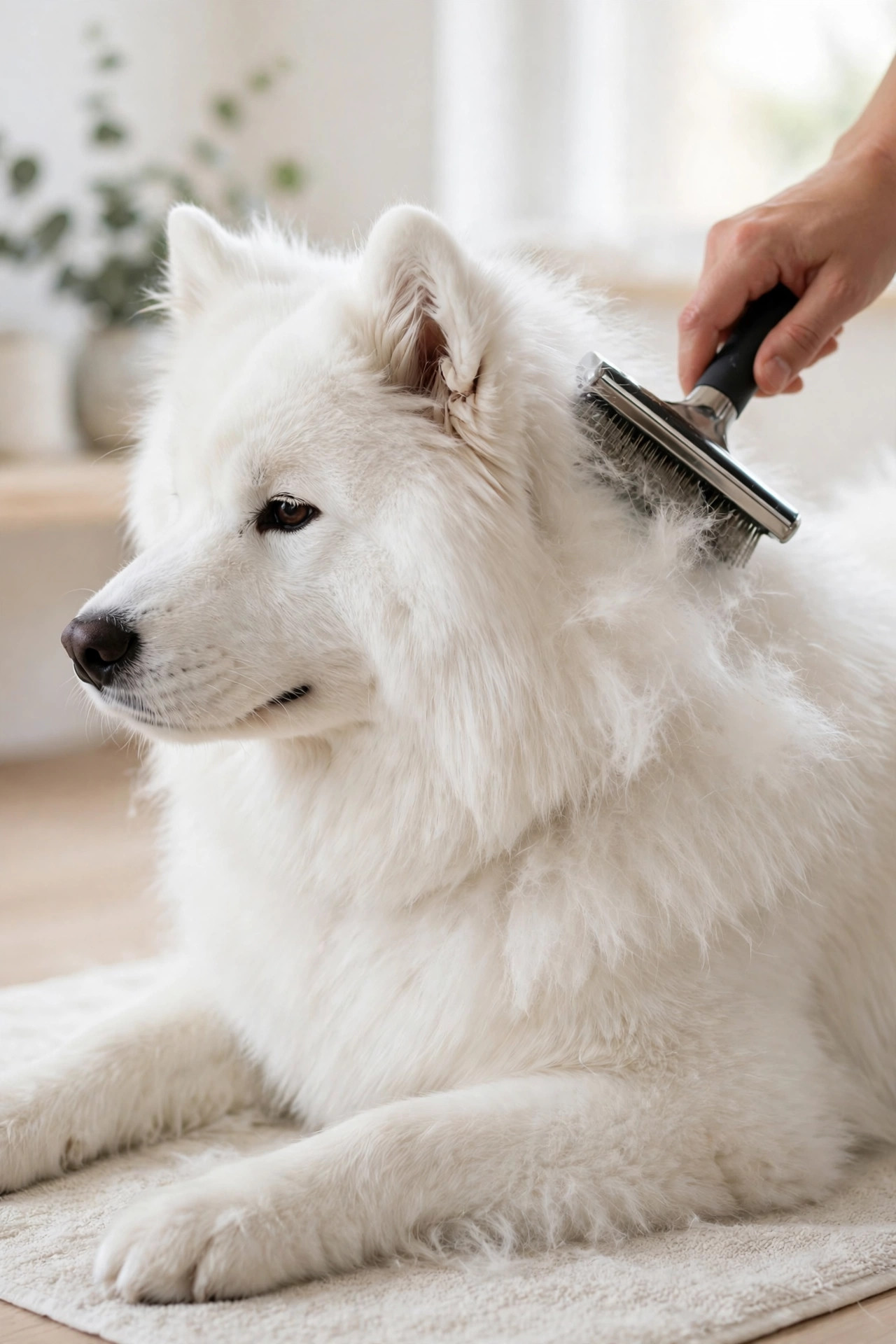
The Samoyed coat is even more work. It has a thick double coat, a soft undercoat and a longer outer coat, and it sheds heavily, especially when the seasons change. White fur will be on everything you own. Brush several times a week with a slicker brush and a comb, daily during shedding season. And never shave a Samoyed: the double coat regulates temperature, and shaving can damage it.
If grooming time is your dealbreaker, the Shepherd asks less of you. The Samoyed asks for real grooming time, every week, forever. Our best brush for a Samoyed guide covers the tools.
Training
This is the biggest difference between the two. German Shepherds learn fast, including bad habits, and they live to work. Short, positive training sessions every day work best, then harder work: obedience, tracking, agility or scent games. A trained Shepherd is a joy; an untrained one is a handful.
Samoyeds are smart and willing, but they have an independent streak. Short, fun, positive sessions work best. They switch off fast if training feels like a lecture. Reward good behaviour, keep it playful, and start recall training early: a Samoyed that spots something interesting will happily run off to investigate.
Barking and guarding
Samoyeds are vocal dogs. They bark, and they talk. Teach “quiet” early: training will not silence them completely, but it can keep the barking manageable. If you need a quiet dog, the Samoyed is the wrong breed.
The Shepherd barks too, often when bored or alert, but it is not a famous talker. And on guarding, the two are opposites. The Shepherd is an excellent watchdog: alert, protective, and reserved with strangers. The Samoyed loves people, including strangers, so do not expect a guard dog from a dog that loves everyone.
Feeding
Feed a complete, good-quality food suited to the breed, in measured meals, and follow the feeding guide for your dog’s age and weight. The Shepherd is a large, active breed, usually fed twice a day as an adult. The Samoyed is a medium-large, active breed, and it loves food, so measure portions: free-feeding plus a food-motivated dog is a fast road to extra weight. Our best food for a German Shepherd guide covers the Shepherd side in detail.
Which one should you choose?
Choose the German Shepherd if you want a loyal protector that lives to train and work, and you are ready for daily exercise and training. It is the better first dog of the two, if you are committed.
Choose the Samoyed if you want a gentle, smiling family dog, you have time for real grooming every week, and you can laugh at barking, talking, and white fur on everything you own.
Choose neither, for now, if you want a calm, low-energy dog, or you live in a small flat with no garden and no time for long daily exercise. And if you want the highest-energy option of all, read our Siberian Husky guide before you decide.
Related: German Shepherd Guide · Samoyed Guide · German Shepherd vs Husky
General care information only. This comparison covers everyday care, not veterinary advice. For anything about your dog’s health, talk to your vet. We never diagnose or treat.
Sources: AKC: German Shepherd Dog breed standard and AKC: Samoyed breed standard. Breed-standard height, weight and lifespan figures on this page come from the AKC.
FAQ
Which sheds more, a German Shepherd or a Samoyed?
Both shed heavily. The Shepherd sheds year-round with two heavier seasons. The Samoyed sheds heavily year-round with a big seasonal shed, and its coat needs more brushing.
Which is easier to train, a German Shepherd or a Samoyed?
The German Shepherd. Shepherds live to work and learn fast. Samoyeds are smart and willing, but they have an independent streak and switch off fast if training feels like a lecture.
Which is better with kids, a German Shepherd or a Samoyed?
Both are usually good with children when well socialized. The Samoyed is usually excellent with kids: gentle and patient. Supervise play with small children with either breed.
Which barks more, a German Shepherd or a Samoyed?
The Samoyed. Samoyeds are vocal dogs: they bark and they talk, and training will not silence them completely. A Shepherd barks too, often when bored or alert, but it is not a famous talker.